
Sewer Line Repair in Tulare
Camera-first diagnosis. Spot repair, trenchless lining, or full replacement — with a real reason for whichever we recommend.
The problem
Tulare's sewer laterals are aging on a schedule. Homes built between 1945 and 1975 in the central and east neighborhoods — the K Street grid, the older blocks off Bardsley, the pre-freeway pockets around downtown — mostly ran clay pipe or Orangeburg (bituminized fiber) to the city main. Clay joints are hair-fine gaps that tree roots pry open. Orangeburg deforms into an oval and eventually collapses on itself. Neither material was built to last 60 years, but that's how old some of these lines are.
Layer on the valley's expansive clay and adobe soils — they swell 3–6% by volume every winter with the rain, then shrink again in the July heat — and every joint takes a small annual beating. Add valley oak, sycamore, and old olive tree roots hunting for the moisture and nutrients inside the pipe, and you get the two most common Tulare failure modes: root intrusion and joint offset.
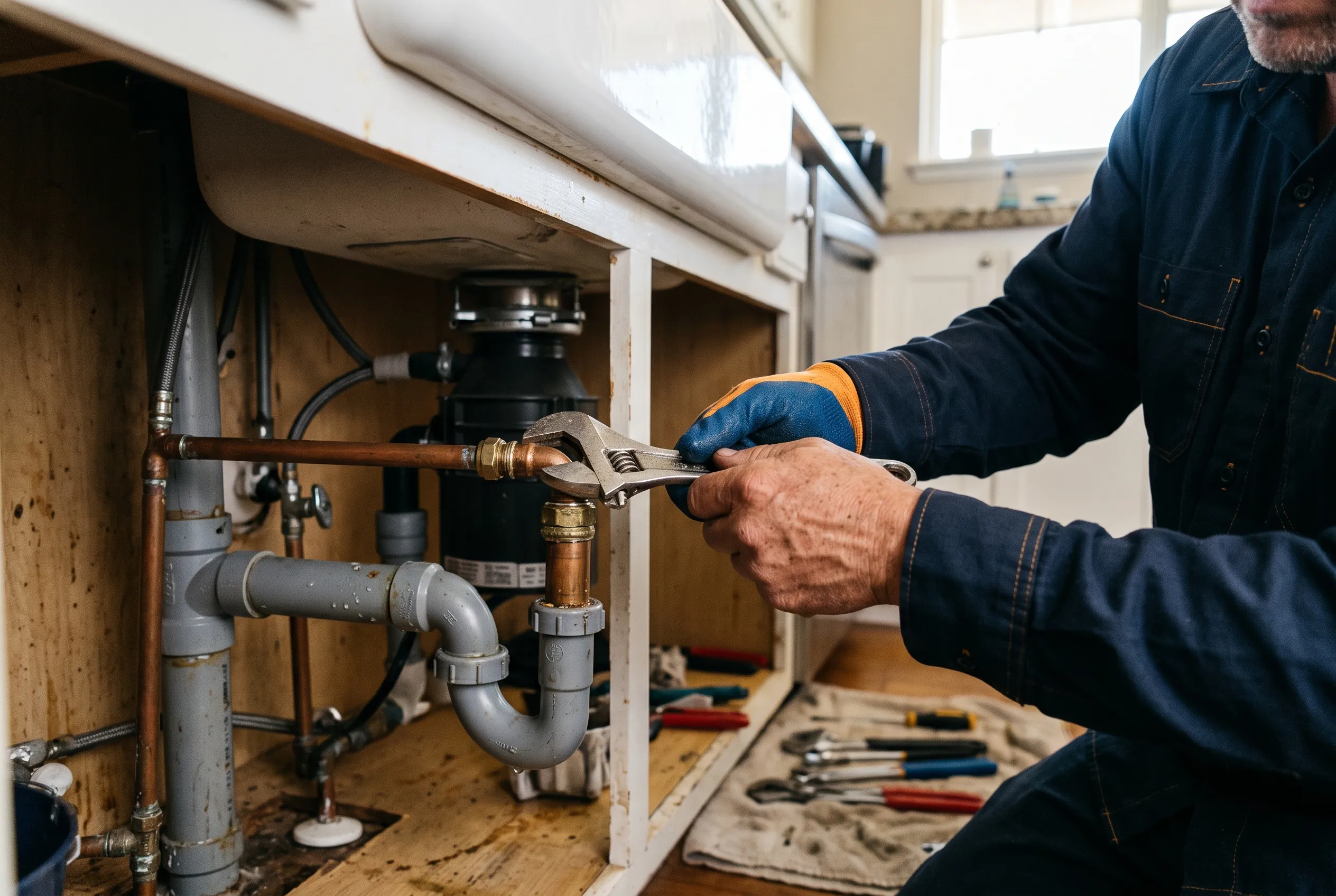
The process
Every sewer repair starts with a camera inspection ($250–$500). The camera shows exactly where the problem is, what kind (roots, belly, offset, crack, full collapse), and how far from the house or the street. That footage is yours — we email you the recording, and any quote references specific footage marks on the pipe. No guesswork.
From there, three real options:
- Hydro-jet + root cutting. $450–$900. Not a repair — a maintenance clear that buys you 6–24 months on a line with root intrusion. Right choice when you're saving up for the real fix or the pipe has a few good years left.
- Spot repair (dig-and-replace 6–10 ft section). $1,800–$4,500 depending on depth and whether the failure is in the yard or under a driveway. This is the workhorse for Tulare — most failures are in one identifiable section.
- Trenchless liner (30–50 ft). $6,500–$12,500. Great for lines under mature landscaping, driveways, or hardscape you don't want dug up. Requires the pipe to be structurally intact enough for the liner to seat.
- Full lateral replacement (50–80 ft to the property line). $8,000–$18,000+. Reserved for fully collapsed or repeatedly-failing lines. Includes new cleanout(s) to code.
Cost factors specific to Tulare
- Soil type. The valley's clay and adobe layers make excavation slower than sandy soil. Add 20–40% to hand-dig costs vs. what you'd pay in a coastal town.
- Depth. Older Tulare laterals often sit 4–6 ft deep. Newer subdivisions can be 6–10 ft. Every extra foot of depth is more shoring and more time.
- Hardscape. Concrete driveway or pavers over the line? Cutting, hauling, and pouring replacement adds $600–$2,500. This is often where trenchless pays back.
- City connection. If the failure is at or past the property line, City of Tulare may have jurisdiction — we coordinate that call so you don't get double-billed.
Why local matters
We've camera-inspected enough Tulare-area laterals to know which subdivisions were plumbed with what, when, and how they're aging. That's real intel — the era of Orangeburg installs in central Tulare, the neighborhoods where every third house has a bellied section from the same subgrade issue, the blocks where root intrusion is at the same distance from every cleanout because of the shared row of valley oaks planted in 1962.
Related: see Sewer Line Repair Cost in Tulare (2026) for the full price breakdown, or back to the home page.
Common questions
How do I know if it's a sewer line problem vs. a drain clog?
If multiple fixtures back up at the same time — you flush the toilet and the tub gurgles, or the washer drains and the shower fills — that's a mainline issue, not a single fixture. Same if the yard cleanout is overflowing. Snaking a single drain won't fix a lateral collapse.
Trenchless vs. dig-and-replace — what's actually better?
Trenchless liner works great where the existing pipe is roughly intact and the failure is cracks, joints, and root intrusion. It doesn't work if the pipe is bellied (sagging), fully collapsed, or has offsets so bad the liner can't seat. We camera first, then tell you honestly which option applies — and both prices.
Do I need to replace the whole line to the street?
Almost never on the first go. Most Tulare-area sewer laterals fail in one specific 6–15 ft section — usually where a tree root cracked it, or where clay soil shifted a joint. Camera locates it, spot repair fixes it. Full replacement is a last resort, not a default.